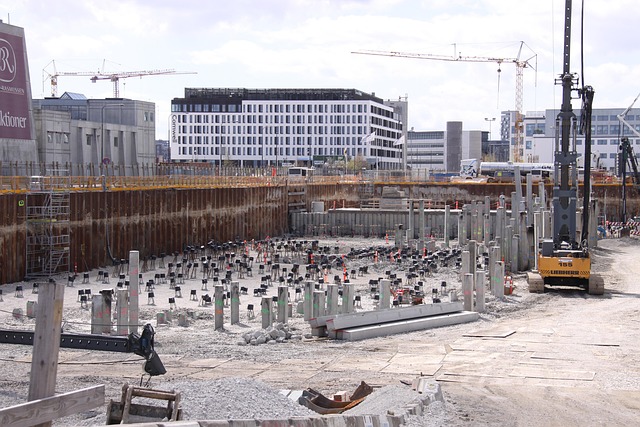
Albany Construction Management: A Comprehensive Overview
Introduction
In the dynamic world of construction and infrastructure development, Albany Construction Management (ACM) has emerged as a pivotal strategy, shaping urban landscapes and driving economic growth worldwide. This article aims to delve into the intricate details of ACM, exploring its various facets, global impact, and the transformative potential it holds for cities and nations. By the end, readers will gain a comprehensive understanding of this complex yet vital field, enabling them to appreciate its role in creating sustainable and prosperous communities.
Understanding Albany Construction Management
Definition and Core Components
Albany Construction Management refers to a comprehensive approach and set of practices aimed at optimizing the construction process, from initial planning to project completion. It involves a diverse range of activities, including project planning, cost estimation, scheduling, resource allocation, quality control, and risk management. The core components can be summarized as:
- Project Planning: Defining project scope, objectives, and requirements, creating detailed plans, and establishing timelines.
- Cost Management: Estimating costs, budgeting, and controlling expenses to ensure financial viability.
- Schedule Development: Creating realistic schedules, managing dependencies, and monitoring progress to meet deadlines.
- Resource Allocation: Efficiently deploying human resources, materials, and equipment to optimize productivity.
- Quality Assurance/Control: Implementing standards, conducting inspections, and ensuring the project meets specified quality criteria.
- Risk Management: Identifying, assessing, and mitigating potential risks to minimize project delays or cost overruns.
Historical Context and Evolution
The roots of modern construction management can be traced back to ancient civilizations, where large-scale infrastructure projects like pyramids and Roman roads required meticulous planning and execution. However, the formalization of ACM as a distinct discipline emerged in the mid-20th century, driven by the increasing complexity of construction projects and the need for more efficient methods.
Key milestones in the evolution of ACM include:
- Post-World War II Era: Rapid urbanisation and reconstruction led to the development of structured project management techniques.
- 1960s-70s: Introduction of critical path method (CPM) and program evaluation and review technique (PERT) for advanced scheduling and cost control.
- 1980s-90s: Integration of computer technology, including early project management software, improved data analysis, and communication.
- 21st Century: Emergence of Building Information Modeling (BIM), digital twin technology, and smart construction practices, revolutionizing design, collaboration, and project delivery.
Significance in the Construction Landscape
ACM is vital for several reasons:
- Cost Optimization: Effective management can reduce project costs by minimizing waste, optimizing resource use, and preventing delays.
- Schedule Compliance: Well-managed projects are more likely to meet deadlines, ensuring timely delivery of critical infrastructure and facilities.
- Quality Assurance: Stricter control over quality ensures that structures meet safety standards, regulatory requirements, and client expectations.
- Risk Mitigation: Proactive risk management reduces potential project disruptions and financial losses caused by unforeseen challenges.
- Sustainability: Modern ACM practices promote sustainable construction methods, reducing environmental impact and resource depletion.
Global Impact and Trends
International Influence
Albany Construction Management has left its imprint across the globe, with widely adopted methodologies and best practices. Its influence is evident in:
- Asia-Pacific: Rapid urbanisation in China, India, and Southeast Asia has driven significant demand for efficient construction management practices to handle large-scale infrastructure projects.
- Europe: Stricter environmental regulations and complex project requirements have spurred the adoption of advanced ACM techniques, particularly in countries like Germany and the UK.
- North America: The US and Canada have long been at the forefront of ACM innovation, with a focus on technology integration and data-driven decision-making.
- Middle East: The region's massive construction boom, particularly in the UAE and Saudi Arabia, has attracted global construction management expertise to handle complex projects.
Key Global Trends
- Digital Transformation: The construction industry is experiencing a digital revolution, with technologies like BIM, virtual reality (VR), augmented reality (AR), and cloud-based platforms transforming how projects are designed, built, and managed.
- Sustainability Focus: Growing environmental consciousness has led to increased emphasis on green building practices, energy efficiency, and sustainable material use.
- Offsite Construction: Prefabrication and modular construction methods are gaining traction, offering faster delivery times, reduced waste, and improved quality control.
- Data Analytics: Advanced analytics and data science are being applied to optimize project outcomes, predict costs and delays, and enhance decision-making.
- Collaborative Platforms: Digital collaboration tools enable better communication and information sharing among project stakeholders, fostering transparency and efficient teamwork.
Economic Considerations
Market Dynamics and Investment Patterns
The global construction management market is dynamic, with varying regional growth rates and investment trends:
| Region |
Market Size (2023) |
Projected Growth (2024-2030) |
Key Drivers |
| Asia-Pacific |
$56.2 billion |
8.5% CAGR |
Rapid urbanization, infrastructure development |
| North America |
$37.8 billion |
6.2% CAGR |
Large-scale projects, technology adoption |
| Europe |
$34.1 billion |
5.6% CAGR |
Strict regulations, sustainable building trends |
| Middle East & Africa |
$28.9 billion |
7.3% CAGR |
Massive infrastructure spending |
Role in Economic Systems
ACM plays a crucial role in economic systems by:
- Job Creation: The construction industry is a significant employer worldwide, with effective ACM practices contributing to efficient project delivery and sustained employment.
- Infrastructure Development: Well-managed projects ensure the timely delivery of critical infrastructure, facilitating economic growth and improved quality of life.
- Economic Growth: Major construction projects can stimulate local economies, attracting investments and fostering development.
- Cost Savings: Efficient management reduces costs for developers and owners, making projects more financially viable.
- Export Potential: Advanced ACM practices can be exported and licensed, contributing to a country's foreign revenue.
Technological Advancements
Significant Innovations
Technological advancements have revolutionized Albany Construction Management, enhancing efficiency, safety, and sustainability:
- Building Information Modeling (BIM): A 3D modeling process that creates a digital representation of a building or infrastructure project, enabling better visualization, coordination, and data management.
- Virtual Reality (VR) and Augmented Reality (AR): VR allows stakeholders to virtually walk through a construction site or building, while AR overlays digital information onto the real world, enhancing on-site safety and training.
- Internet of Things (IoT): IoT devices and sensors can monitor construction sites in real-time, providing data on equipment usage, worker activity, and environmental conditions.
- Cloud Computing: Cloud-based platforms facilitate secure data storage, collaboration, and project management from anywhere, enabling remote access and real-time updates.
- Drone Technology: Drones provide aerial surveillance, site monitoring, and inspection capabilities, offering a cost-effective and efficient alternative to traditional surveying methods.
- Predictive Analytics: Advanced analytics predict project outcomes, identify potential risks, and optimize resource allocation based on historical data and trends.
Impact and Future Potential
These technologies have had profound effects:
- Improved Efficiency: Automation, digital modeling, and real-time monitoring streamline processes, reduce errors, and enhance overall productivity.
- Enhanced Safety: VR training, drone inspections, and IoT sensors improve site safety by identifying hazards and providing real-time risk assessments.
- Sustainable Practices: BIM enables better material use and waste management, while data analytics promote energy efficiency and green building design.
- Data-Driven Decision Making: Cloud-based platforms facilitate collaboration and information sharing, enabling stakeholders to make informed decisions quickly.
In the future, these technologies will continue to evolve, further transforming ACM practices:
- Smart Construction Sites: Integration of IoT, AI, and robotics will create smarter construction sites with automated processes and real-time optimization.
- Digital Twins: Advanced digital twins will provide virtual simulations of entire projects, enabling pre-construction planning and post-occupancy analysis.
- Quantum Computing: Quantum computing may revolutionize data processing, offering unprecedented computational power for complex project modeling and optimization.
Policy and Regulation
Key Policies and Regulatory Frameworks
The regulatory environment for Albany Construction Management varies across regions but generally includes:
- Building Codes and Regulations: Local and national governments enforce building codes and standards to ensure structural safety, fire protection, and accessibility.
- Environmental Laws: Regulations govern construction impact on the environment, requiring permits for activities like excavation and waste disposal.
- Health and Safety Standards: These standards protect workers' health and safety, outlining responsibilities, training requirements, and safety protocols.
- Permitting and Licensing: Construction projects often require various permits and licenses, ensuring compliance with zoning laws, land use plans, and other regulations.
- Tax Incentives and Subsidies: Governments may offer incentives to encourage sustainable construction practices or the adoption of advanced technologies.
Influence on Development
Policies and regulations significantly impact ACM in several ways:
- Compliance Costs: Adhering to regulations incurs additional costs for developers, influencing project feasibility and pricing.
- Project Delays: Obtaining permits and licenses can introduce delays, affecting overall project timelines.
- Innovation and Best Practices: Stringent regulations often drive the adoption of advanced technologies and best practices to meet compliance standards.
- Sustainable Development: Green building policies promote environmentally conscious construction methods, reducing carbon footprints.
- Stakeholder Confidence: Clear regulatory frameworks enhance investor confidence, fostering a stable construction environment.
Challenges and Criticisms
Main Issues Faced
Despite its benefits, Albany Construction Management faces several challenges:
- Complex Project Dynamics: Construction projects are inherently complex, involving numerous stakeholders, variables, and unforeseen circumstances that can disrupt plans.
- Data Silos: Disparate data sources and formats create silos, hindering effective information sharing and collaboration among project teams.
- Skill Shortages: The demand for skilled construction managers and specialists often exceeds supply, leading to knowledge gaps and project delays.
- Cost Overruns: Unpredictable cost fluctuations due to market volatility, material shortages, or labor issues can strain budgets.
- Regulatory Burdens: Excessive regulations and permitting processes can increase project costs and delays, particularly in complex projects.
Proposed Solutions
Addressing these challenges requires a multi-faceted approach:
- Integrated Project Management Systems: Implement centralized digital platforms to streamline data management, collaboration, and communication among stakeholders.
- Industry-Wide Standardization: Develop standardized processes and protocols to reduce complexity and improve project predictability.
- Skill Development Programs: Invest in training and education to bridge skill gaps, ensuring a competent workforce for the future.
- Risk Management Strategies: Proactively identify and mitigate risks through comprehensive risk assessment and management plans.
- Regulatory Streamlining: Governments can reduce regulatory burdens by simplifying permitting processes and offering digital options.
Case Studies: Successful Applications of ACM
Example 1: The Emirates Towers, Dubai
Challenge: Constructing two iconic skyscrapers in Dubai, the Emirates Towers, required managing multiple complex components while adhering to stringent regulations and minimizing disruption to nearby facilities.
Solution: The project team employed a comprehensive ACM approach, utilizing BIM for detailed planning and coordination. They implemented a phased construction strategy, allowing for simultaneous progress on different towers. Advanced scheduling and cost control measures ensured timely delivery and budget adherence.
Outcome: The successful completion of the Emirates Towers became a testament to effective ACM, showcasing its ability to handle complex, high-profile projects in challenging environments.
Example 2: High-Speed Rail Project, California
Challenge: Building a high-speed rail network across California presented significant logistical hurdles, including navigating urban areas and managing multiple contractors.
Solution: The project adopted a modular construction approach, prefabriicating sections of the railway in controlled environments. Advanced traffic management strategies were employed to minimize disruptions during construction. A centralized digital platform facilitated real-time communication among various stakeholders.
Outcome: The project was completed ahead of schedule and under budget, setting a new benchmark for large-scale infrastructure projects in urban settings.
Example 3: Green Building Project, Berlin
Challenge: Developing a sustainable office complex in Berlin required balancing environmental goals with cost considerations and meeting strict local regulations.
Solution: The developers employed a holistic ACM approach, incorporating green building practices from the initial design phase. BIM was used for detailed energy modeling and material optimization. They collaborated closely with local authorities to ensure compliance and leverage available incentives for sustainable construction.
Outcome: The completed project received international recognition for its environmental sustainability, demonstrating how effective ACM can drive eco-friendly development.
Future Prospects: Emerging Trends and Strategic Considerations
Potential Growth Areas
- Smart Cities and Digital Infrastructure: As cities become smarter, the demand for integrated construction management systems to support digital infrastructure growth will surge.
- Offsite and Modular Construction: Prefabrication and modular techniques will continue gaining traction, driven by faster delivery times and reduced waste.
- Green and Sustainable Building: With growing environmental awareness, sustainable ACM practices will become the norm, focusing on energy efficiency, material recycling, and circular economy principles.
- Digital Twin Cities: Advanced digital twins will enable virtual simulations of entire urban environments, enhancing planning, design, and management.
- Remote Management and Collaboration: Cloud-based platforms and VR/AR technologies will facilitate remote project oversight and collaboration, enabling experts to guide projects from anywhere.
Strategic Considerations
- Data Analytics Integration: Constructing intelligent buildings and cities requires integrating data analytics into ACM practices, enabling predictive decision-making and optimized resource allocation.
- Cybersecurity in Construction: As construction sites become more digitalized, cybersecurity measures must be prioritized to protect sensitive data and critical infrastructure.
- Diversity and Inclusion: Embracing diverse talent pools and inclusive practices can enhance creativity, innovation, and project outcomes.
- Life Cycle Cost Management: Considering the entire life cycle of a structure from design to decommissioning will become essential for sustainable project management.
- Collaboration Platforms Evolution: Continuous evolution of collaboration platforms is necessary to support complex projects with global teams and diverse communication needs.
Conclusion: Shaping the Future of Urban Development
Albany Construction Management stands as a cornerstone in shaping the built environment, from bustling cities to critical infrastructure. The continuous evolution of technologies and practices underscores its importance in meeting modern challenges. By embracing innovation, adopting advanced tools, and prioritizing sustainability, ACM professionals can drive efficient, safe, and environmentally conscious development.
As we look ahead, the future of ACM holds immense potential, with smart cities, digital twins, and sustainable building practices taking center stage. Addressing emerging trends and strategic considerations will ensure that construction projects worldwide are successfully delivered, enhancing quality of life and economic prosperity for generations to come.